
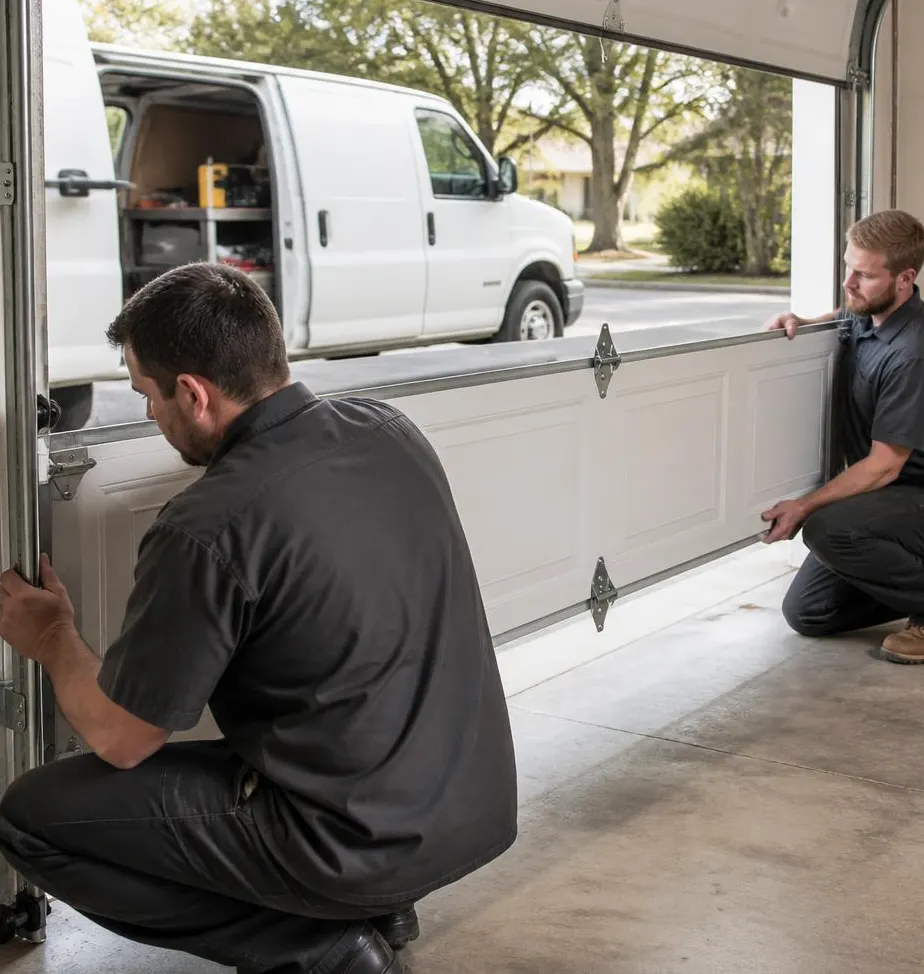
What a Technician Sees on These Calls
Most service calls about a noisy or sticky garage door in this area start the same way: a homeowner sprayed WD-40 on the tracks a few months back, and now the rollers are grinding and the hinges have a fine coat of grit stuck to them. WD-40 is a solvent, not a lubricant. It displaces moisture for a day or two, then evaporates and leaves bare metal exposed to the humidity that sits over Calhoun County most of the year. Add in afternoon downpours and the salt-tinged air that drifts up from the Gulf during hurricane season, and you get rust forming on springs, hinges, and track bolts faster than most homeowners expect. A five-minute lubrication job, done with the right product, prevents a lot of that.
Tools and Supplies You Need
- A garage door-specific lithium or silicone-based lubricant (not WD-40, not household oil, not grease)
- A clean microfiber rag or shop towel
- A soft-bristle brush or old toothbrush for cleaning hinges
- A stepladder
- Safety glasses
Step-by-Step: How to Lubricate Your Garage Door
- Close the door and disconnect the opener. Pull the manual release cord so the door is under your control, not the opener's, while you work.
- Wipe down the tracks first, but don't lubricate them. Tracks should stay clean and dry. Lubricant on the track attracts dust and debris, which turns into a gritty paste that wears down rollers faster.
- Clean each hinge and roller with the brush. Humidity in this part of Alabama causes a buildup of fine rust dust on moving metal parts. Brush it off before applying anything new.
- Apply lubricant to the hinges. A few drops at each pivot point is enough. Work the door up and down by hand once to let it settle into the joint.
- Lubricate the rollers, focusing on the bearings, not the wheel surface. If you have plastic rollers, skip this step; they're sealed and don't need oil.
- Coat the springs lightly. This is the step most homeowners skip, and it's the one that matters most for rust prevention, since springs flex constantly and show wear first.
- Lubricate the opener's chain or screw drive according to the manufacturer's instructions, using a small amount so it doesn't drip onto the rail.
- Wipe off excess lubricant everywhere. Anything left pooling on the surface just collects dust and grime, especially with the pollen and road dust common around US-431.
- Reconnect the opener and run the door through a full cycle. Listen for any remaining squeaks, which usually point to a part that needs more than lubrication.
What to Use, What to Avoid
Silicone-based and lithium-based garage door lubricants are built to resist washing out in humid, rainy conditions, which makes them the right choice for this climate. They don't attract dust the way heavier greases do, and they hold up better than household oils that thin out in summer heat and go sticky in cooler months.
Avoid WD-40, cooking oil, motor oil, and petroleum jelly. These either evaporate too fast, gum up in dust, or break down the rubber seals and weatherstripping that keep wind-driven rain out during storm season. Also skip spraying lubricant directly into the opener's motor housing or electrical components; a light wipe is all that part needs.
What's a Homeowner Job, and What Isn't
Cleaning and lubricating hinges, rollers, and the opener's drive are reasonable DIY tasks for most homeowners with basic tools and a stepladder. What's not a DIY job is touching the torsion or extension springs themselves beyond a light coat of lubricant. These springs hold enough tension to cause serious injury if they're adjusted, tightened, or replaced without the right equipment. If a spring looks stretched, rusted through, or makes a popping sound during operation, that's a sign it needs replacing, not lubricating, and that's technician work.
When to Call Wellington Garage Door
If you've lubricated the door and it's still grinding, sagging on one side, or slow to respond to the opener, that usually points to worn rollers, a bent track, or a spring losing tension, none of which lubrication fixes. Wellington Garage Door handles spring replacement and full garage door maintenance visits, where a technician inspects the whole system, tightens hardware that's worked loose from humidity swings, and replaces parts before they fail during a storm. It's a quick visit that saves a much more expensive repair bill later.
If your garage door needs more than a bottle of lubricant can fix, call Wellington Garage Door. We serve homeowners throughout Wellington, Oxford, Anniston, Jacksonville, Piedmont, Weaver, Saks, and Hobson City, and we're ready to get your door running quietly and reliably before the next round of storms rolls through.