
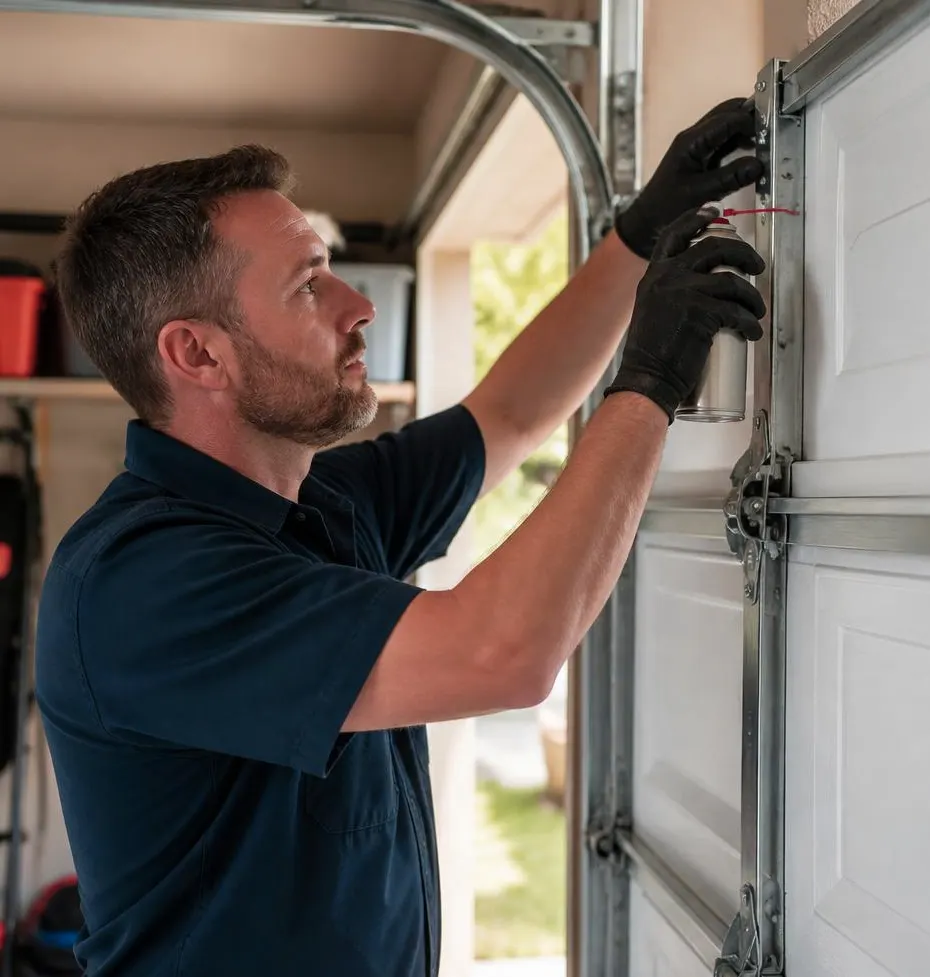
Here's the argument in one sentence: ignoring a fraying cable or a wobbly roller through another season of Alabama humidity doesn't save you money, it just moves the bill from "inspection" to "emergency call, trapped car, and a dented bumper." A cable that snaps doesn't give a warning shot. It lets go, the door drops unevenly, and whatever's under it — a car, a foot, a kid's bike — takes the hit. That's the cost of waiting. Now let's settle what's actually going on.
What the cables are actually doing
Your garage door is heavier than it looks, and it's not the opener holding that weight — it's the springs and the lift cables working together. The springs store the lifting force; the cables transfer that force to the bottom corners of the door so it rises evenly instead of tipping. When a cable frays, it's losing strands one at a time under tension, usually from rust eating into the wire or from rubbing against a worn drum or misaligned track. In this part of Alabama, the humidity and afternoon downpours speed that up. Moisture gets into the garage, sits on the cable, and starts corrosion long before the door looks "old."
A frayed cable rarely fails during a calm moment. It fails under load — which means right when you're opening or closing the door, right when someone's standing under it or a car is halfway in or out.
Worn rollers: the quiet one that gets ignored
Rollers don't carry the weight the way cables and springs do, but they control how smoothly the door tracks. Worn rollers show up as a grinding or popping noise, a door that hesitates or jerks as it moves, or a door that looks slightly crooked in the track. Nylon rollers wear out from age and friction; steel rollers without sealed bearings can rust from moisture, especially after a humid summer and a stretch of storms. Either way, worn rollers force the door to fight the track, which puts extra strain on the cables and springs — the parts that actually matter for safety. A cheap roller problem, left alone, becomes a cable and spring problem.
What you can safely check yourself
- Look (don't touch) at the cables near the bottom brackets for broken strands, rust, or fraying — a few exposed wire threads is already too far gone.
- Watch the door move through one full cycle: does it shudder, lean to one side, or seem to catch at the same spot every time?
- Check rollers for flat spots, cracks, or visible rust where they meet the track.
- Listen for grinding versus a dry squeak — grinding usually means metal-on-metal wear, not just a lubrication issue.
What you should not do is touch the cables or try to adjust spring tension yourself. Lift cables are under serious tension even when the door looks still, and a cable that lets go while you're near it can cause real injury.
The trade-off homeowners actually argue about
One spouse says "it's just a noise, we'll deal with it eventually." The other says "fix it now before it gets worse." Here's the honest math: replacing worn rollers and a fraying cable as routine maintenance is a planned, controlled job. Waiting until the cable snaps turns it into an emergency repair — often paired with spring replacement, because a snapped cable frequently takes a worn spring down with it, and sometimes opener damage if the door comes down hard enough to strain the drive system. National ranges for planned roller and cable service run well below what an after-hours emergency call with spring replacement and opener diagnostics typically costs. The parts are cheap. The timing is what gets expensive.
There's also the wind-load factor. Homes here are built with wind-load rules in mind for a reason, and a door that's already struggling with worn hardware is in worse shape to handle gusts and pressure swings during a storm. A door that drops unevenly or binds in the track is a door that's more likely to fail exactly when wind is pushing on it.
When to call Wellington Garage Door
If you're seeing fraying, rust on the cables, or rollers that grind, jump, or look flat on one side, that's the point to call rather than wait for the loud failure. We handle spring replacement and garage door maintenance as routine visits — we check cable condition, roller wear, track alignment, and spring balance in one trip, and replace what's actually worn instead of guessing. Catching it now, before storm season winds down fully, is the cheaper argument to win.
If your door is making noise, dropping unevenly, or just hasn't been looked at in a while, call Wellington Garage Door. We serve homeowners and businesses throughout Wellington, AL and the surrounding area, and we'll tell you straight whether it's a roller, a cable, or something bigger.